The GH Axis Explained — What It Is and Why It Matters After 35
Growth hormone coordinates recovery, body composition, and cellular repair throughout your entire adult life — and its decline after 35 is one of the most consequential changes of mid-life.

Most people know growth hormone exists. Far fewer understand what it actually does — or what happens when its output starts declining in your mid-30s.
What the GH Axis Is
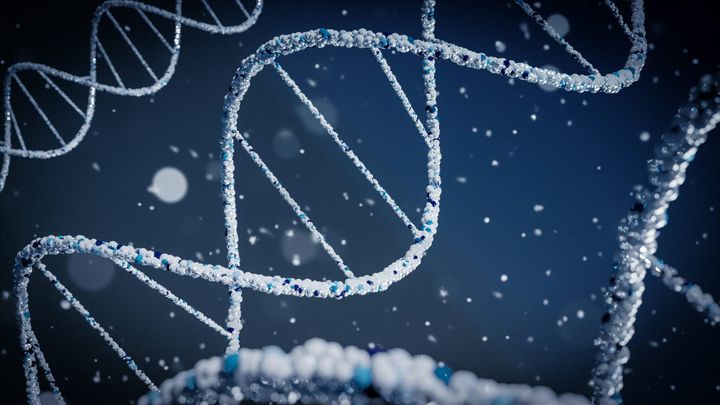
The growth hormone axis — the GH/IGF-1 axis — is a coordinated biological system. Your hypothalamus produces Growth Hormone-Releasing Hormone (GHRH), which signals your pituitary gland to release growth hormone (GH) into the bloodstream. That GH then travels to the liver, where it stimulates the production of Insulin-like Growth Factor 1 (IGF-1) — the downstream signal that drives most of GH's effects on your tissues.
What It Actually Does
Recovery and tissue repair. GH and IGF-1 signal satellite cells — the stem cells of your muscles — to activate and repair damaged tissue after exercise or injury.
Body composition. GH directly stimulates lipolysis — the breakdown of stored fat for energy — particularly visceral fat. Simultaneously, it supports lean muscle preservation.
Sleep architecture. The majority of your daily GH secretion happens during the first 90 minutes of deep, slow-wave sleep. Poor sleep disrupts GH secretion, and declining GH function affects sleep quality.
Metabolic regulation. GH plays a role in insulin sensitivity, glucose metabolism, and how your body partitions energy.
The Decline
GH secretion peaks in adolescence and begins declining in your mid-20s. By your 40s, GH pulse amplitude is roughly half what it was in your 20s. The effects accumulate gradually: slower recovery, shifting body composition toward fat storage, declining sleep quality, reduced energy.
Why This Matters After 35
GH axis decline is a gradual process, which means there's a meaningful window for intervention. GH secretion is responsive — to sleep quality, to exercise (particularly resistance training), to nutrition, and to body composition itself. Getting the fundamentals right matters and these are the foundations before anything else.
For people who have those foundations in place and want to go further, growth hormone secretagogues — compounds that stimulate your own pituitary to produce more GH rather than replacing GH directly — are the most significant development in this space.
If you want to understand your own GH axis function, the right starting point is a comprehensive blood panel and a conversation with a doctor who works in this space. Start your assessment at MEORA →